As a supplier of spade drills, I’ve witnessed firsthand the intricate relationship between the flute design of these tools and their overall performance. The flute, that helical groove running along the drill bit’s body, is far more than a simple structural feature; it’s a critical determinant of how well the spade drill functions in various applications. Spade Drill
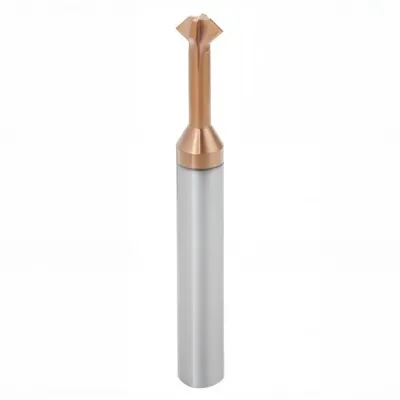
Basics of Flute Design in Spade Drills
Let’s start with the fundamentals. The flute design in spade drills is characterized by several key parameters, including the helix angle, flute width, and flute depth. The helix angle, measured in degrees, is the angle at which the flute wraps around the drill bit. A higher helix angle, typically ranging from 30 to 45 degrees, is beneficial for drilling softer materials. This is because a steeper helix allows for faster chip removal, as the chips are more easily ejected from the hole. For instance, when drilling through aluminum or copper, a spade drill with a 40 – degree helix angle can efficiently remove the chips, preventing them from clogging the drill and ensuring a smoother drilling process.
On the other hand, for harder materials like stainless steel or titanium, a lower helix angle (around 20 to 30 degrees) is preferred. The reduced helix angle provides greater strength to the drill bit, as it allows for a thicker web (the central portion of the drill bit between the flutes). This increased web thickness helps to withstand the higher cutting forces generated when drilling hard materials, reducing the risk of drill breakage.
The flute width and depth also play crucial roles. A wider and deeper flute can accommodate larger chips, which is essential when drilling materials that produce chunky chips. For example, when working on cast iron, which tends to break into large pieces during drilling, a spade drill with generous flute width and depth can handle the chips more effectively. However, if the flutes are too wide and deep, the drill bit may lose some of its structural integrity, especially in smaller – diameter spade drills. Therefore, there needs to be a balance between chip – handling capacity and bit strength.
Impact on Chip Evacuation
One of the most significant ways flute design affects spade drill performance is through chip evacuation. Efficient chip evacuation is essential for maintaining a clean drilling environment, preventing chip recutting, and reducing heat generation. When chips are not properly evacuated, they can pile up in the flutes, causing the drill bit to bind and overheat. This not only reduces the drill’s cutting efficiency but also shortens its lifespan.
A well – designed flute acts as a channel for chips to travel up and out of the hole. The helical shape of the flute guides the chips upwards as the drill rotates. The helix angle influences the speed and direction of chip movement. A smooth and continuous flute surface also facilitates easy chip flow. If the flute surface is rough or has burrs, chips can get snagged, impeding the evacuation process.
In addition to the helix angle and surface smoothness, the number of flutes can also impact chip evacuation. Spade drills typically have two flutes, but in some cases, multi – flute designs are used. Multi – flute spade drills can handle a larger volume of chips and provide a more stable cutting action. However, they may also require more precise manufacturing to ensure that each flute contributes equally to chip removal.
Influence on Cutting Forces and Torque
Flute design also has a direct impact on the cutting forces and torque required during drilling. The helix angle affects the way the cutting edges engage with the workpiece. A higher helix angle reduces the axial force (the force pushing the drill into the material) because it allows the chips to be lifted out more easily. This results in lower torque requirements, which is beneficial for both the drill and the drilling machine.
For example, in a production environment where a large number of holes need to be drilled, a spade drill with a higher helix angle can significantly reduce the load on the drilling machine. This not only extends the machine’s lifespan but also allows for higher drilling speeds, improving productivity.
Conversely, a lower helix angle increases the axial force and torque but provides better stability and control during drilling. When drilling deep holes or materials with inconsistent hardness, a lower helix angle can help to prevent the drill bit from wandering and produce more accurate holes.
Effect on Hole Quality
The quality of the hole produced by a spade drill is closely related to the flute design. A well – designed flute can help to achieve a smooth hole surface finish, accurate hole diameter, and minimal hole taper.
Efficient chip evacuation is crucial for achieving a smooth surface finish. When chips are properly removed from the hole, there is less chance of chip recutting, which can cause rough surfaces and score marks on the hole wall. A consistent helix angle and smooth flute surface also contribute to a more uniform cutting action, resulting in a smoother finish.
In terms of hole diameter accuracy, the flute design affects how the drill bit self – centers in the hole. A balanced flute design with appropriate helix angles and widths helps to keep the drill bit stable during drilling, reducing the risk of hole enlargement or deviation from the desired diameter.
Minimal hole taper is also an important aspect of hole quality. A properly designed flute can help to distribute the cutting forces evenly along the length of the drill bit, preventing the drill from wearing unevenly and reducing the likelihood of taper formation in the hole.
Considerations for Different Applications
When choosing a spade drill for a specific application, it’s essential to consider the flute design based on the material being drilled, the depth of the hole, and the required hole quality.
For general – purpose drilling in medium – hardness materials like mild steel, a spade drill with a 30 – 35 – degree helix angle, moderate flute width, and depth is usually a good choice. This design provides a good balance between chip evacuation, cutting force, and hole quality.
In aerospace and automotive industries, where high – precision holes are required in advanced materials such as titanium alloys, spade drills with custom – designed flutes may be necessary. These drills may have a lower helix angle for better stability and special coatings on the flute surface to enhance chip flow and reduce friction.
When drilling deep holes, a flute design that promotes efficient chip evacuation is crucial. Spade drills with wide, deep flutes and a relatively high helix angle can be used to ensure that chips are removed from the hole before they can cause problems.
Conclusion
In conclusion, the flute design of a spade drill is a complex and critical factor that significantly impacts its performance. From chip evacuation and cutting forces to hole quality, every aspect of drilling is affected by the helix angle, flute width, depth, and surface smoothness. As a supplier of spade drills, I understand the importance of providing our customers with tools that are optimized for their specific applications.
Whether you’re in the manufacturing, construction, or any other industry that requires precision drilling, choosing the right spade drill with the appropriate flute design is essential for achieving high – quality results, increasing productivity, and reducing costs. We are committed to working closely with our customers to understand their needs and recommend the best spade drill solutions.
Face Mill Cutter Heads If you’re interested in discussing your spade drill requirements or exploring how our products can improve your drilling operations, I invite you to contact us for a consultation and possible procurement. We look forward to the opportunity to work with you and provide you with the highest – quality spade drills on the market.
References
- Boothroyd, G., & Knight, W. A. (2006). Fundamentals of Machining and Machine Tools. CRC Press.
- Trent, E. M., & Wright, P. K. (2000). Metal Cutting. Butterworth – Heinemann.
- Stephenson, D. A., & Agapiou, J. S. (2006). Metal Machining: Theory and Applications. Wiley.
Small Craftsman (Shandong) Machine & Tools Co., Ltd.
Small Craftsman (Shandong) Machine & Tools Co., Ltd. is one of the most experienced spade drill manufacturers and suppliers in China, also supports customized service with low price. Please feel free to buy bulk high quality spade drill in stock here from our factory. Contact us for pricelist.
Address: No.9 Quanxin Rd., Sishui Economic Developing Zone, Jining, Shandong, China.
E-mail: 6196@ocutchina.com
WebSite: https://www.ocutooling.com/
