What is the thread form of square nuts? Square Nut
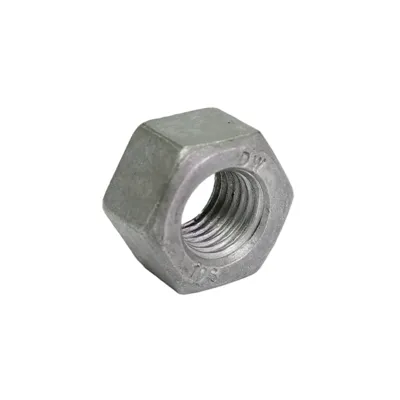
As a supplier of square nuts, I often encounter inquiries from customers about the thread forms of these essential fasteners. Understanding the thread form of square nuts is crucial for ensuring proper fit, function, and mechanical performance in various applications. In this blog post, I will delve into the details of square nut thread forms, exploring their different types, characteristics, and practical implications.
Basic Concepts of Thread Forms
Before we dive into the specific thread forms of square nuts, let’s first establish some fundamental concepts about threads. A thread is a helical ridge or groove on a cylindrical or conical surface, used to convert rotational motion into linear motion or to provide a means of fastening two or more components together. Threads can be classified based on several factors, including their shape, pitch, and direction.
The shape of a thread refers to its cross – sectional profile. Common thread shapes include triangular, square, trapezoidal, and buttress. The pitch of a thread is the distance between corresponding points on adjacent threads, measured parallel to the axis of the thread. The direction of a thread can be either right – hand (the most common), where the nut advances clockwise onto the bolt, or left – hand, where it advances counter – clockwise.
Thread Forms of Square Nuts
1. Unified National Thread (UN)
The Unified National Thread is one of the most widely used thread forms in North America. It has a 60 – degree triangular profile and is available in two main series: coarse (UNC) and fine (UNF). Coarse threads have a larger pitch, which means fewer threads per inch, and are generally used in applications where quick assembly and disassembly are required. Fine threads, on the other hand, have a smaller pitch and more threads per inch, providing increased resistance to loosening due to vibration.
Square nuts with UN threads are commonly used in automotive, machinery, and construction applications. They offer good strength and compatibility with a wide range of bolts and screws.
2. Metric Thread
Metric threads are the standard in most countries outside of North America. They have a 60 – degree triangular profile similar to the UN threads but are based on the metric system of measurement. The pitch of metric threads is measured in millimeters, and they are available in coarse and fine series as well.
Metric square nuts are used in a variety of industries, including electronics, aerospace, and general machinery. Their widespread use is due to the global standardization of the metric system, which simplifies international trade and manufacturing.
3. Square Thread
The square thread form, as the name suggests, has a square cross – section. It is designed to provide high efficiency in power transmission applications, as it minimizes frictional losses. Square threads are often used in lead screws, jacks, and other mechanisms where linear motion needs to be precisely controlled.
Square nuts with square threads are less common than those with triangular threads, but they are essential in specific applications where power transmission and high load – carrying capacity are required.
4. Acme Thread
Acme threads have a trapezoidal cross – section with a 29 – degree included angle. They are a modification of the square thread, offering better manufacturability and retaining many of the advantages of the square thread, such as high load – carrying capacity and efficient power transmission.
Acme square nuts are commonly used in machine tool applications, such as lathes and milling machines, where they are used to convert the rotational motion of a lead screw into linear motion of the tool or worktable.
Characteristics and Applications of Different Thread Forms
Unified National Thread
- Characteristics: The 60 – degree triangular profile provides good strength and self – locking properties. Coarse threads are easy to assemble and disassemble, while fine threads offer better resistance to vibration.
- Applications: Automotive engines, machinery frames, construction equipment, and general fastening applications in North American industries.
Metric Thread
- Characteristics: Based on the metric system, which is widely used globally. The 60 – degree triangular profile ensures compatibility with a large number of bolts and screws.
- Applications: Electronic devices, aerospace components, and machinery manufactured in countries that follow the metric system.
Square Thread
- Characteristics: High efficiency in power transmission due to the square cross – section, which minimizes frictional losses. It has high load – carrying capacity and is suitable for applications requiring precise linear motion control.
- Applications: Lead screws in industrial machinery, jacks, and other power – transmitting mechanisms.
Acme Thread
- Characteristics: A trapezoidal cross – section that is easier to manufacture than square threads. It retains good load – carrying capacity and is suitable for applications requiring power transmission and linear motion control.
- Applications: Machine tool lead screws, linear actuators, and other precision machinery.
Considerations for Selecting the Right Thread Form
When selecting the thread form for square nuts, several factors need to be considered:
1. Application Requirements
The specific application will determine the most suitable thread form. For example, if the application involves high – speed power transmission, a square or Acme thread may be more appropriate. If the application requires quick assembly and disassembly, a coarse – pitch UN or metric thread may be the best choice.
2. Compatibility
The thread form of the square nut must be compatible with the thread form of the bolt or screw it will be used with. Using incompatible thread forms can lead to improper fit, reduced strength, and potential failure of the assembly.
3. Environmental Conditions
The environmental conditions in which the square nut will be used can also affect the choice of thread form. For example, in a corrosive environment, a thread form with good corrosion – resistance properties, such as stainless steel metric threads, may be required.
4. Cost
The cost of manufacturing and purchasing square nuts with different thread forms can vary. Generally, more common thread forms, such as UN and metric, are more cost – effective than less common ones, such as square and Acme threads.
Our Offerings as a Square Nut Supplier
As a leading supplier of square nuts, we offer a wide range of thread forms to meet the diverse needs of our customers. Our square nuts are manufactured to the highest quality standards, using advanced production techniques and high – quality materials.

We offer square nuts with UN, metric, square, and Acme thread forms, in various sizes and finishes. Whether you need square nuts for automotive, aerospace, machinery, or any other application, we have the right solution for you. Our team of experts is always available to provide technical support and advice on selecting the most suitable thread form for your specific requirements.
Contact Us for Procurement
Hex Bolt If you are in the market for high – quality square nuts, we invite you to contact us for procurement. Our comprehensive range of thread forms, combined with our commitment to quality and customer service, makes us the ideal partner for your square nut needs. Whether you are a large – scale manufacturer or a small business, we can provide you with the right products at competitive prices.
References
- Machinery’s Handbook, 31st Edition
- ASME B1.1 – 2003 Unified Screw Threads
- ISO 68 – 1: 1998 ISO general purpose screw threads — Basic profile
- BSI BS 84:1956 Specification for metric ISO screw threads
Jiaxing Jinling Hardware Technolgy Joint Stock Co., Ltd.
As one of the most experienced square nut manufacturers and suppliers in China, we also support customized service. Please feel free to buy bulk high-grade square nut made in China here from our factory. For quotation and price list, contact us now.
Address: No.32, Shenjiadai, Xuyouche Village, Qinshan Subdistrict, Haiyan County, Zhejiang Province, China
E-mail: jlzxl@jinlingfstn.com
WebSite: https://www.china-nut-factory.com/
