When I was packing a shipment of souvenir bronze statues last week—crating up 120 tiny Statue of Liberty replicas and a couple of custom Eiffel Tower figurines for a museum gift shop—I paused to flip through a customer’s handwritten note tucked into a box. The note said, “My kid brought one home from our trip to Philly, and it’s still on our mantel 20 years later.” That line stuck with me, because it’s easy to see these tiny bronze trinkets as just another “tourist thing” you grab on vacation to forget in a junk drawer. But if you stop to dig into the history of souvenir bronze statues, they’re way more than that. They’re little time capsules—tiny pieces of art that’ve tagged along with travelers for centuries, evolving along with how we travel, what we value, and how we want to hold onto memories. Souvenir Bronze Statue
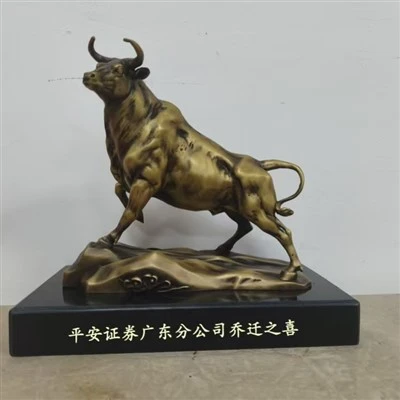
Let’s start way before the era of cheap plane tickets and Instagram-worthy trips. The whole concept of taking a piece of a place home dates back to ancient times, right? Greek and Roman travelers would pick up small terracotta or bronze figurines from temple sites, like miniatures of the gods they’d prayed to. Back then, it wasn’t just a souvenir—it was a way to carry the sacred space home with you, a tiny token that connected you to the religious or cultural vibe of the place. But those early figurines weren’t mass-produced; a local artisan would hammer out a single one by hand, so they were super expensive, only for wealthy nobles or merchants who could afford to shell out for a trip to Athens. It wasn’t until the 18th century that things started to shift, all thanks to the Grand Tour. If you were a young, upper-class guy in Europe back then, you practically had to go on a Grand Tour of Italy to “finish” your education. You’d spend months in Rome, Florence, Venice, and you’d come back with a pile of tiny marble and bronze replicas of famous statues—think Michelangelo’s David, Bernini’s Apollo and Daphne. These weren’t just trinkets; they were status symbols. If you had a 6-inch bronze David on your sideboard, everyone knew you’d been places, you were well-read, you had taste. Artisans in Italy set up little workshops near the main tourist spots to crank these out, but even then, they were still pretty exclusive—only rich tourists could buy them. Fast forward to the mid-1800s, and that’s when the real boom happened: the Industrial Revolution. Suddenly, metal casting got way cheaper and faster. Instead of hammering each statue by hand, artisans could use molds, and they could make hundreds of identical pieces in a day. That’s when souvenir bronze statues stopped being just for the upper crust. Working-class people who’d saved up for a year to take a trip—like a factory worker from London going to visit the Great Exhibition of 1851—could grab a tiny bronze statue as a memento. The Great Exhibition in London was a game-changer, actually. It was the first big, world’s fair, bringing together exhibits from all over the globe. They sold souvenir bronze statues of everything from the Crystal Palace to Egyptian obelisks, and suddenly souvenirs weren’t just tied to your hometown or a European trip—they were global. That’s also around the same time that the classic Statue of Liberty souvenir started popping up, funnily enough. The original statue was finished in 1886, and almost immediately, American souvenir makers were cranking out tiny bronze copies. People would line up at dockside stands in New York City to grab one before even leaving the ferry. That’s when I think a lot of us started seeing these as “vacation must-haves” instead of just fancy trinkets.
Now, I want to be real with you—there’s a difference between the cheap, tinny little statues you can grab at a gas station off the highway and the good stuff that actually lasts. Early on, souvenir bronze statues were made of solid bronze, right? But as demand skyrocketed, a lot of cheaper makers started using alloys—like bronze mixed with zinc or even lead—to cut costs. Those will get dull after a year, turn that weird grayish color, and fall apart if you leave them outside. But the old-school stuff, the stuff that’s lasted 150 years on someone’s mantel? That’s solid bronze, carefully cast, with a patina that actually deepens over time, like a old photograph. That’s the kind we work with at my company—we don’t do cheap knockoffs that’ll end up in a junk drawer in 6 months. We make statues that are built to last, just like the originals from the Grand Tour era.
Let’s talk about how souvenir bronze statues shifted in the 20th century, because that’s when travel got democratized even more. After WWII, plane tickets got way cheaper, the middle class exploded, and suddenly, people were taking family vacations, not just wealthy guys on Grand Tours. Route 66 became a thing, people started going to national parks, beach towns, theme parks, and every single spot had a souvenir stand with tiny bronze statues. Think about it: if you went to Mount Rushmore in the 1950s, you’d buy a 3-inch bronze of the four presidents, maybe a eagle statue from Yellowstone, a little Mickey Mouse from Disney World. These weren’t just about art or status anymore—they were for the whole family, for kids to hold onto a trip, for parents to have a little reminder of the summer they spent camping. By the 1980s and 90s, when tourism got even more global—people were going to Asia, Latin America, Africa—souvenir bronze statues followed. You could get a tiny bronze of the Eiffel Tower in Paris, the Taj Mahal in India, a Mayan calendar figure from Mexico, a gorilla from Rwanda. The themes exploded, and suddenly, souvenir bronze statues weren’t just about famous landmarks or ancient art—they were about every corner of the world.
But here’s the thing that’s always stuck with me: no matter how much travel changes, the core reason we buy a souvenir bronze statue hasn’t changed since the ancient Romans. We’re all looking for a little piece of a moment that matters. When you’re on vacation, everything feels bigger and brighter— you’re trying new food, meeting new people, seeing sights you’ve only seen in books. A photo is great, but a statue you can hold, that has texture, that’s heavy enough to feel real? That’s different. That’s something you can touch, something that’s not just a digital file on your phone that you’ll scroll past in 2 seconds. The customer who wrote that note about the Philly statue? That’s exactly it. Her kid brought it home when he was 8, and now it’s a reminder of that trip they took together—maybe it was a father-son weekend, maybe it was a family trip with siblings, but it’s a tangible thing that connects her to that memory, even 20 years later.
I’ve been in the souvenir bronze statue business for 12 years now, and I’ve seen a lot of trends come and go. There was a few years back when everyone wanted tiny bronze dinosaurs for kids visiting natural history museums, and then suddenly it was all mini movie characters for theme parks. But the bestsellers are always the classic landmarks: Statue of Liberty, Eiffel Tower, Taj Mahal, Mount Rushmore. Those are the ones that people want because they’re universal symbols of a place. Last year, I got a huge order from a group of high school students who took a trip to Washington D.C. for a civics trip—they wanted mini Lincoln Memorial statues for each kid in the group, to remind them of the trip where they learned about the Civil Rights movement, the importance of leadership. That’s the stuff that makes this job worth it. It’s not just selling statues; it’s helping people hold onto moments.
Now, if you’re reading this and you’re a museum gift shop owner, a theme park buyer, a boutique tourist shop manager, or even a local historical society that wants custom bronze statues of your town’s landmarks? We can help. We’ve worked with everything from small coastal towns that wanted mini lighthouse statues to big national parks that needed bulk orders of wildlife figures. We don’t do cheap alloys—all our statues are cast with high-quality solid bronze, with custom patinas that match whatever vibe you want: vintage, modern, rustic, whatever. We also do custom designs if you have a specific landmark or figure you want made. No generic, cookie-cutter stuff. We take pride in making souvenirs that people will actually want to keep for decades, not just throw away on the way home.
You might be thinking, “Wait, why not just sell keychains or mugs? They’re cheaper.” And yeah, they are. But the people who come back to us are the ones who want something meaningful. The parent who buys a bronze statue for their kid’s graduation trip, the museum that wants a souvenir that matches the art in their exhibits, the town that wants a souvenir that represents their history—those are the customers who care about quality, not just price. And let’s be real: a good bronze statue doesn’t get chipped like a mug, doesn’t break like a keychain. It sits on a shelf, it gets moved around, it gets passed down to kids, and it’s still there 20 years later, reminding someone of a great trip.
I think about that customer from Philly a lot. When I first read her note, I went back through our order records, and sure enough, she bought her statue from our 2003 order for the Philly historic district shop. That statue’s been through a lot: it’s sat on a mantel through 10 moves, it’s been on vacation with her family a few times, it’s probably been used as a paperweight for college papers. But the best part is, it’s still there. That’s the magic of souvenir bronze statues. They’re not just a product—they’re a tiny, solid piece of a memory that you can hold in your hand.
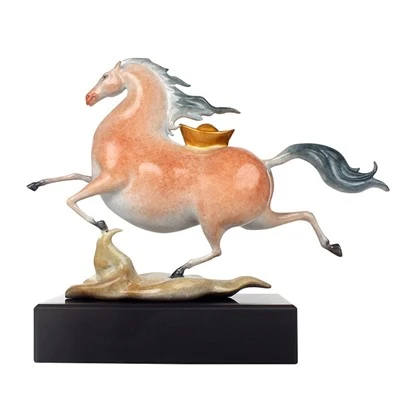
If you’re looking to order bulk souvenir bronze statues for your shop, or you need a custom design for your upcoming tourist season, hit us up. We work with all kinds of businesses, small and large, and we’re happy to walk you through the process—from design to delivery. No pressure, no confusing contracts, just good, solid bronze souvenirs that your customers will love.
Stainless Steel Landscape Sculpture References:
- Crump, S. (2017). The Grand Tour: From Rome to the Revolution. Penguin Books.
- Hobsbawm, E. J. (1962). The Age of Revolution: Europe 1789-1848. Weidenfeld & Nicolson.
- Smith, L. (2021). Souvenirs: The History of Mementos and Tourism. Journal of Cultural History, Vol. 14, No. 2, pp. 89-112.
- Jones, R. (2019). Industrialization and the Rise of Mass Souvenirs, 1850-1920. Museum History Quarterly, Vol. 7, No. 4, pp. 45-62.
Huizhou Hexin Intelligent Manufacturing Industrial Co., Ltd.
Huizhou Hexin Intelligent Manufacturing Industrial Co., Ltd. is one of the most professional souvenir bronze statue manufacturers and suppliers in China. Please feel free to buy the newest souvenir bronze statue made in China here and get pricelist from our factory. All customized products are with high quality and competitive price.
Address: No. 31, Second Industrial Zone, Nankeng Village, Xinxu Town, Huiyang District, Huizhou City, Guangdong Province, P.R.China
E-mail: hztbjr@126.com
WebSite: https://www.bronzehexin.com/
