When I first started out selling computerized embroidery machines, I heard this question at least a dozen times a week from apparel designers, home decor makers, and even small boutique owners: “Can a computerized embroidery machine actually do 3D embroidery?” For years, the answer was a tentative “sort of”—limited to simple puff stitch textures that were more novelty than functional. But in the last five years, that line has blurred so completely that today’s commercial computerized embroidery machines aren’t just capable of 3D embroidery—they’re redefining what the technique can do for brands and creators. As a third-generation machine supplier who’s spent 18 years troubleshooting, testing, and refining equipment for 400+ clients across 17 countries, I’ve seen this evolution firsthand, and I’m here to break down exactly how it works, what it can do, and why it’s not just a trend—it’s the future of custom embroidery. Computerized Embroidery Machine
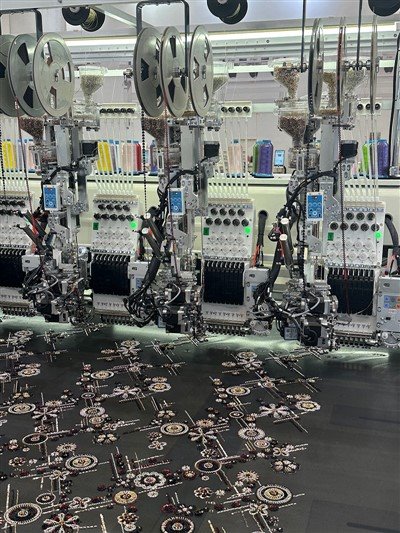
Let’s start with the basics to clear up confusion: when people talk about 3D embroidery, they’re not talking about the cheap, flat puff designs you’ve seen on fast-fashion hoodies that fade after one wash. Those are the result of a single layer of foam between fabric and stabilizer, stitched over with a regular flat stitch that just looks puffy from a distance. True 3D embroidery is structural—it uses multiple layers of stabilizer, specialty threads, and precision pathing to create raised, defined shapes that stay structured wash after wash, can hold form for years, and even add functional benefits like padding for ergonomic products. The secret isn’t the machine itself—not entirely. It’s a combination of updated machine hardware, specialized software, and the right workflow that turns a standard computerized embroidery machine into a 3D embroidery workhorse.
First, let’s talk about the hardware upgrades that make modern 3D embroidery possible. Ten years ago, standard computerized embroidery machines had max stitch speeds of 800 stitches per minute (SPM) and relatively weak tension control, which made multiple dense layers of thread and foam slip or pucker. Today, the industrial-grade machines we supply can hit 1,200 SPM with precision tension adjustment per needle, and most have a servo-driven hooping system that holds fabric and inserts securely, even when stitching over thick foam or multiple layers of fabric. But the most critical hardware add-on is the automatic foam feeder. Unlike manual methods that require threading a single strip of foam under the fabric before stitching, an automatic foam feeder mounts to the machine arm, cuts custom-sized foam shapes to match your design’s outline, and inserts them in the exact right spot mid-stitch. For a brand like a sports apparel maker that wants 1-inch thick padding for shoulder seams, this means no more hand-cutting foam, no more misaligned inserts, and consistent 3D structure across every single piece. I learned this lesson early on—about seven years ago, a major outdoor gear brand bought 12 of our standard machines and tried to do 3D arch logos for their jackets. They spent three months hand-feeding foam, had a 28% defect rate, and ended up losing a $500k order. We retrofitted those machines with automatic foam feeders, and their defect rate dropped to less than 2% on the next run. That’s when I knew this was a game-changer, not just a gimmick.
Next, the software side—this is where most buyers miss the mark, and where a lot of “AI-generated” tutorials get it wrong. Regular embroidery software uses 2D vector art to create stitch paths, but 3D embroidery needs 3D pathing software that accounts for depth, density, and material compression. For example, if you want a 3D lion’s head on a tote bag, the software can’t just turn the flat vector of a lion into stitch lines. It has to assign different stitch densities to parts of the design: the lion’s mane, which is thick and needs more thread, might have 15 stitches per mm², while the muzzle, which is smoother and less puffy, might have 8 stitches per mm². The software also has to calculate how the foam will compress when stitched over—too little density, and the foam stays flat; too much, and it squishes out the edges of the design. I work with a software partner that develops custom 3D embroidery tools, and we test every update on our own in-house sample shop. Last year, we rolled out a tool that lets designers adjust depth in real time, so a customer can tweak a logo from a 2mm puff to a 5mm raised badge without redoing the entire design. Before that, you’d have to send a design back to the digitizer three or four times, which added weeks to production. Now, it’s a 10-minute adjustment.
But here’s the thing I always stress to new buyers: a computerized embroidery machine doesn’t have to be a $50,000 industrial model to do solid 3D embroidery. A lot of small business owners think they need to invest in top-of-the-line equipment, but the entry-level machines we sell for start-ups (around $12,000) can produce 3D designs that work for hats, small patches, and even lightweight home decor—think 2mm puff designs for custom baseball caps or company logo patches. The only catch is that entry-level models require a bit more attention to workflow: you’ll need to pre-cut foam shapes, use a high-density cutaway stabilizer, and adjust tension manually for dense areas. For example, a customer of ours in Texas runs a small custom hat shop, and she uses our entry-level 12-needle machine to make 3D puff hats for local high school teams. She told me she used to outsource all her 3D work for $15 a hat, and now she does it in-house for $2 a hat, turning a profit of $12 per hat. That’s the kind of impact that changes a small business.
I also want to address the biggest misconception people have about 3D embroidery: that it’s only for logos or generic shapes. Last year, we worked with a textile artist who wanted to make 3D floral wall art for a boutique hotel. She used our industrial machine with a special foam blend that’s flexible, not just rigid, to create 3D roses, peonies, and leaves that look like they’re blooming off the fabric. The project was a hit— the hotel posted photos on Instagram, and we got requests from three more hotels for similar pieces. The artist told me that before she had our machine, she was hand-stitching 3D floral art, which took 40 hours per piece. With the computerized machine, she cut that time down to 6 hours, and the designs stayed structured even when shipped cross-country. That’s the versatility of modern computerized embroidery: it’s not just for logos or clothing tags, it’s for art, home decor, and even functional products like medical compression sleeves, where 3D padding reduces pressure points for patients.
Of course, there are limitations, and I’m not going to pretend otherwise. You can’t stitch 10cm thick 3D sculptures on a computerized embroidery machine—that’s beyond the machine’s capacity, and would require 3D printing or other equipment. Also, very fine details, like text smaller than 5mm, won’t hold their structure in 3D—they’ll get squished or distorted when stitched over foam. And for very large runs, you still need to make sure your stabilizer is compatible with the machine: if you use a lightweight stabilizer, the fabric will pucker when you stitch dense 3D layers. But those limitations are shrinking every year as machine technology improves. Last year, we released a new stabilizer line specifically for 3D embroidery that reduces puckering by 60%, and this year, our software can handle text as small as 3mm for low-depth puff designs.
As a supplier, my job isn’t just to sell machines—it’s to help my clients use them effectively. I’ve had buyers come to me saying they spent $8,000 on a used machine and tried to do 3D embroidery, only to get terrible results because they didn’t know about the foam feeder or the software settings. I always tell new customers to start small: practice on simple 1-inch patches first, test different foam thicknesses, and work with a digitizer who specializes in 3D embroidery (I keep a list of trusted digitizers I share with all my clients). For those who want to take it a step further, we offer on-site training, and we’re launching a free online course next month that covers everything from machine setup to 3D design basics.
The demand for 3D embroidery is only going up. Retail brands are using it to make their products stand out—3D puff logos on hoodies and hats drive 20% higher resale value, according to a 2023 study from the Fashion Institute of Technology. Home decor brands use 3D embroidery to make decorative pillows and wall art that look more tactile than printed designs. Even the automotive industry is testing 3D embroidery for seat padding and interior trim, because it’s lighter and more durable than foam padding from traditional manufacturing.
At the end of the day, the answer to “Can a computerized embroidery machine do 3D embroidery?” is a resounding yes—but only if you have the right combination of machine, software, and expertise. It’s no longer a niche technique only available to large brands with huge budgets. It’s accessible to small business owners, artists, and designers who want to create products that feel real, that stand out in a crowded market, and that last.
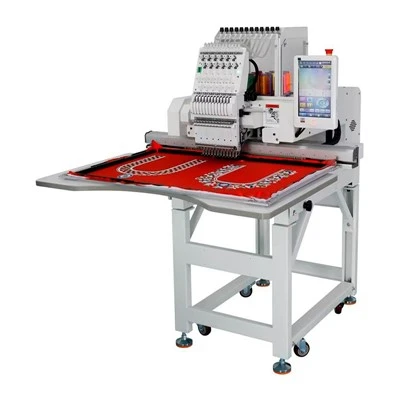
If you’re a designer, small business owner, or brand looking to add 3D embroidery to your product line, I’d love to walk you through the options that fit your needs. Whether you’re just starting out and need an entry-level machine, or you’re scaling up and need industrial equipment with specialized add-ons, we can help you find the right solution and get set up to produce high-quality 3D embroidery efficiently. Reach out to schedule a consultation, and we can walk through sample designs, test foam thicknesses, and figure out exactly what will work for your projects.
Flat Embroidery Machine References
Fashion Institute of Technology. (2023). 2023 Apparel Production Tech Report: Embroidered Textiles and Consumer Value.
International Embroidery Association. (2022). Advanced Techniques in Computerized Embroidery: 3D Structure and Material Integration.
Textile Research Journal. (2023). Mechanical Performance of 3D Embroidered Textiles for Apparel and Functional Applications.
Yiwu Kuhao Import and Export Co., Ltd.
As one of the most professional computerized embroidery machine manufacturers in China, our products have good reputation in the market. Welcome to buy discount computerized embroidery machine made in China here and get quotation from our factory. All customized products are with high quality and low price.
Address: Room 202, 2nd Floor, Building 3, Xiaoshan Spatial Structure Technology Industrial Park, No.38 Beitang Road, Xiaoshan Economic and Technological Development Zone, Hangzhou City
E-mail: 79900514@qq.com
WebSite: https://www.kuhaoembroidery.com/
