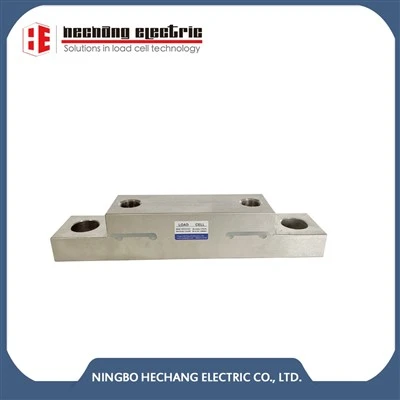
Strain sensors are essential tools in a wide range of industries, from aerospace and automotive to civil engineering and biomedical research. As a professional supplier of strain sensors, I have witnessed firsthand the importance and versatility of these devices. In this blog, I will delve into the fascinating world of strain sensors and explain how they measure strain. Strain Sensors
Understanding Strain
Before we explore how strain sensors measure strain, it is crucial to understand what strain is. Strain is defined as the ratio of the change in length (ΔL) of an object to its original length (L₀). Mathematically, it is expressed as ε = ΔL/L₀. Strain is a dimensionless quantity and is typically expressed in units of microstrain (με), where 1 με is equal to 1 × 10⁻⁶ strain.
There are two main types of strain: normal strain and shear strain. Normal strain occurs when an object is stretched or compressed along its axis, while shear strain occurs when an object is subjected to a force that causes it to deform in a direction parallel to its cross – sectional area.
Working Principles of Strain Sensors
The most common type of strain sensor is the resistive strain gauge. The working principle of a resistive strain gauge is based on the piezoresistive effect. When a conductive material is subjected to strain, its resistance changes. This change in resistance is proportional to the strain applied to the material.
The resistance of a conductor is given by the formula R = ρL/A, where ρ is the resistivity of the material, L is the length of the conductor, and A is the cross – sectional area. When the conductor is strained, its length and cross – sectional area change. If the conductor is stretched, its length increases and its cross – sectional area decreases. Conversely, if the conductor is compressed, its length decreases and its cross – sectional area increases.
The change in resistance due to strain can be expressed using the gauge factor (GF). The gauge factor is defined as the ratio of the fractional change in resistance (ΔR/R) to the strain (ε), i.e., GF=(ΔR/R)/ε. The gauge factor is a characteristic property of the strain – sensing material. For most metallic strain gauges, the gauge factor is around 2.
Construction of Resistive Strain Gauges
A typical resistive strain gauge consists of a thin, metallic foil grid that is bonded to a flexible backing material. The metallic foil is usually made of a material such as constantan (a copper – nickel alloy) or nichrome (a nickel – chromium alloy). These materials have a high resistivity and a relatively stable gauge factor over a wide range of temperatures.
The backing material provides mechanical support to the foil grid and also isolates it electrically from the surface on which it is mounted. The backing material is usually made of a polymer such as polyimide or epoxy.
The strain gauge is attached to the surface of the object whose strain is to be measured using an appropriate adhesive. When the object is strained, the strain is transferred to the strain gauge through the adhesive, causing the resistance of the foil grid to change.
Measuring the Change in Resistance
To measure the change in resistance of the strain gauge, it is usually connected in a Wheatstone bridge circuit. A Wheatstone bridge consists of four resistors arranged in a diamond – shaped configuration. The strain gauge forms one of the arms of the bridge, and the other three arms are made up of fixed resistors.
When the strain gauge is unstrained, the bridge is balanced, and the output voltage across the bridge is zero. However, when the strain gauge is subjected to strain, its resistance changes, causing the bridge to become unbalanced. The output voltage across the bridge is then proportional to the change in resistance of the strain gauge, and hence, to the strain applied to the object.
The output voltage of the Wheatstone bridge is usually very small, on the order of millivolts. Therefore, it needs to be amplified before it can be measured accurately. An instrumentation amplifier is commonly used to amplify the output voltage of the Wheatstone bridge.
Other Types of Strain Sensors
In addition to resistive strain gauges, there are several other types of strain sensors, each with its own advantages and disadvantages.
Capacitive Strain Sensors
Capacitive strain sensors work on the principle of a change in capacitance due to strain. A capacitive strain sensor consists of two electrodes separated by a dielectric material. When the sensor is subjected to strain, the distance between the electrodes changes, causing the capacitance of the sensor to change.
The advantage of capacitive strain sensors is their high sensitivity and low power consumption. However, they are more sensitive to environmental factors such as temperature and humidity than resistive strain sensors.
Optical Strain Sensors
Optical strain sensors use light to measure strain. One common type of optical strain sensor is the fiber – optic strain sensor. In a fiber – optic strain sensor, a fiber – optic cable is attached to the object whose strain is to be measured. When the object is strained, the fiber – optic cable is also strained, causing a change in the optical properties of the fiber, such as the refractive index or the phase of the light propagating through it.
The advantage of optical strain sensors is their immunity to electromagnetic interference and their ability to measure strain in harsh environments. However, they are more expensive and more complex to install and maintain than resistive strain sensors.
Applications of Strain Sensors
Strain sensors are used in a wide variety of applications, including:
- Structural Health Monitoring: In civil engineering, strain sensors are used to monitor the health of structures such as bridges, buildings, and dams. By measuring the strain in the structural components, engineers can detect early signs of damage or fatigue and take appropriate measures to prevent catastrophic failures.
- Aerospace and Automotive Industries: In the aerospace and automotive industries, strain sensors are used to measure the stress and strain in aircraft wings, fuselages, and automotive components such as engine blocks and suspension systems. This information is used to optimize the design of these components and to ensure their safety and reliability.
- Biomedical Research: In biomedical research, strain sensors are used to measure the mechanical properties of biological tissues such as muscles, tendons, and bones. This information is used to understand the biomechanics of the human body and to develop new medical devices and treatments.
Why Choose Our Strain Sensors
As a leading supplier of strain sensors, we offer a wide range of high – quality strain sensors to meet the diverse needs of our customers. Our strain sensors are designed and manufactured using the latest technologies and materials to ensure high accuracy, reliability, and durability.
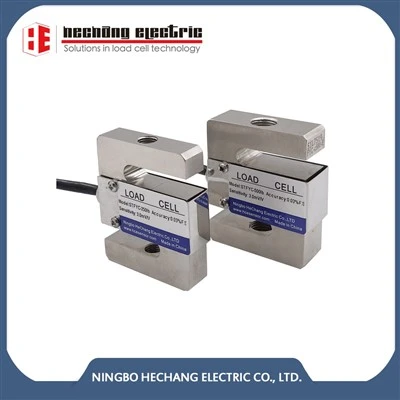
We have a team of experienced engineers and technicians who can provide technical support and advice to our customers. Whether you are a researcher in a laboratory or an engineer in a manufacturing plant, we can help you choose the right strain sensor for your application.
Pressure Sensors If you are interested in purchasing our strain sensors or would like to learn more about our products and services, please do not hesitate to contact us. We look forward to having a discussion with you and working together to meet your strain – sensing needs.
References
- Jones, A. D. (2009). "Strain Measurement with Bonded Resistance Strain Gauges". Society for Experimental Mechanics.
- Ono, K., & Ina, Y. (2012). "Fiber Optic Sensors for Structural Health Monitoring of Civil Infrastructure". Progress in Aerospace Sciences, 53, 1 – 22.
- Smith, G. K. (1988). "Capacitive Sensors: Design and Applications". John Wiley & Sons.
Ningbo Hechang Electric Co., Ltd.
As one of the most professional strain sensors manufacturers and suppliers in China, we also support customized service. We warmly welcome you to buy advanced strain sensors for sale here from our factory. If you have any enquiry about cooperation, please feel free to email us.
Address: No.66 Yongmao West Road, Ningbo, China
E-mail: info@hcesensor.com
WebSite: https://www.hechangsensor.com/
