Hey everyone, let’s cut to the chase—if you’re in the market for grading sorting machines, you’ve probably asked yourself this exact question: Are there actual international standards for these things? Because let’s be real, throwing big money at a machine that messes up your grading, breaks down nonstop, or doesn’t meet global food safety rules would be a total disaster. As someone who’s been in the grading sorting machine game for like 12 years (I started on the shop floor building these, not just sitting behind a desk), I get how confusing this stuff is. A lot of clients I talk to think “international standards” is just a buzzword, but it’s way more than that—it’s what keeps your operation running smoothly, avoids fines, and makes sure your end product doesn’t get rejected halfway across the world. Grading Sorting Machine

First off, let’s not mix up two things: there are general international standards that apply to all food processing equipment (which grading sorting machines are, duh), and then there are specific ones tailored to grading sorting tech, especially for the food and ag sectors. Wait, but hold on—no, there’s no single, all-encompassing “one standard to rule them all” for every grading sorting machine on the planet. That’s the first myth I want to bust. You see, grading sorting machines are used for everything from apples and nuts to rice, pharmaceuticals, and even tiny electronics. So a machine that sorts cherry tomatoes by size and sugar content has totally different requirements than one that sorts plastic parts. But the core stuff that matters—food safety, reliability, measurement accuracy, that’s all covered by global bodies.
Let’s start with the big one: ISO, obviously. The International Organization for Standardization is basically the gold standard here, right? For grading sorting machines that touch food, the key ISO specs are ISO 22000 for food safety management, and ISO 1940-1 for mechanical balance (so your machine doesn’t shake itself apart mid-shift). Wait, also ISO 7256 for the measurement methods used in sorting—like if a machine is grading potatoes by weight, how do you make sure its scale is consistent with every other machine out there? That’s ISO 7256. I’ll be real with you, when we design our machines, we don’t just check ISO once and call it good. We audit every component supplier to make sure their parts (the scales, cameras, sensors) meet ISO tolerance levels, because a 1% error in weight grading might not sound like much, but if you’re processing 10 tons of apples an hour, that’s 100 kilos of perfectly good fruit getting misclassified as “too small” and wasted. That’s money straight down the drain.
But wait, ISO is global, but a lot of regions have their own standards that sync up with ISO, but have extra bits. Like the EU has CE marking—if you’re selling into Europe, your grading sorting machine has to comply with CE, which includes EN standards that tie right back to ISO. For example, EN 1935 is specific to fruit and veg sorting equipment, which is basically the EU’s translated and tweaked version of ISO 7256. And if you’re dealing with North America, the FDA has its own standards, like FSMA (Food Safety Modernization Act) which applies to equipment that comes into contact with food. A lot of folks ask me, “Do I need CE, ISO, and FDA for my machine?” The short answer: if you’re shipping to multiple regions, yeah, you do. I once had a client in Mexico who bought a cheap, uncertified machine from a no-name supplier out of China—he thought ISO was just overkill. Turns out he was exporting avocados to the US, and the FDA rejected an entire shipment because the sorting machine was misclassifying 5% of ripe fruit as unripe. That cost him like $80k in lost product and fines. Lesson learned.
Now, what about specific grading tech, like optical sorters? Those are the ones that use cameras and AI to sort by color, bruising, even sugar content (for things like grapes or coffee beans). Is there a standard for those? Yeah, there’s ISO 22975, which is specifically for optical sorting equipment for food. That standard covers things like how the camera’s resolution is calibrated, how consistent the lighting has to be (super important—if the lighting shifts, the AI will misclassify stuff), and how you test the machine’s accuracy over 10,000+ cycles. We run that test every single time before a machine leaves our warehouse. Last year, a client in Germany brought in a competitor’s optical sorter that couldn’t pass the ISO 22975 accuracy test—they were rejecting 12% of good blueberries because their lighting system wasn’t calibrated to the standard. We replaced their sorting heads and adjusted the lighting to meet ISO, and now they’re at a 0.8% error rate. That’s the difference between making profit and losing it on small fruit.
But here’s the thing that most suppliers won’t tell you: standards are only useful if you actually follow them, and if they’re tailored to your specific product. A lot of “certified” machines out there only check a box for general ISO, but skip the product-specific bits. Like, grading sorting machines for nuts have to handle high volumes and small part sizes, so ISO 1935 for fruit doesn’t cover that. For nuts, there’s also the US-based USDA standards for grading, which a lot of international clients need to meet if they’re selling to the US nut market. I had a client in Nigeria that was selling cashews to the US—he had a machine that met ISO, but missed the USDA’s specific grading tolerance for broken cashews. We adjusted the machine’s sorting algorithm to match USDA’s requirements, and he doubled his export orders within 6 months. That’s how standards move beyond just compliance—they’re a competitive edge.
Wait, what about smaller operations? A lot of small farms or food processing plants I talk to don’t think they need international standards, “we only sell locally.” But even local markets are getting stricter. For example, here in the US, many state agriculture departments now require grading equipment to meet ISO measurement standards to avoid unfair competition—like if one vendor grades apples at 150g minimum and another at 120g, customers will just buy the cheaper one, so the standard makes the playing field fair. Also, if you ever decide to expand, having a machine that’s already certified to ISO/CE/FDA means you don’t have to retrofit it later—saves you tens of thousands in downtime and upgrades.
Let’s address a common complaint I hear: “Standards are too vague, they don’t cover every edge case.” Yeah, that’s true. But here’s the thing—international standards are baseline requirements, not rulebooks for every single scenario. They give you a framework to build a reliable machine, and then you can adjust that framework to your specific product. For example, our team doesn’t just use ISO 22975 as is—we tweak the calibration for clients sorting coffee beans vs. cherry tomatoes, because coffee needs to detect tiny defects (like insect damage) that tomatoes don’t. But that baseline ISO ensures that our tweaks are tested and accurate, not just made up.
Another big one: safety standards. Grading sorting machines have moving parts—conveyors, chutes, high-pressure air jets (for optical sorters that blow off bad product). ISO 13857 covers safety distances on machinery, so no one gets their hand caught in a moving conveyor. That’s not just a standard—it’s keeping your workers safe. I’ve seen so many small factories skip this to save a buck, and end up with a workers’ comp claim that puts them out of business. Standards aren’t just about paperwork—they’re about protecting your people, your product, and your bottom line.
Now, let’s cut through the jargon. If you’re shopping for a grading sorting machine, here’s what you actually need to ask the supplier, no matter what: “What standards is this machine certified to, and do they apply to my specific product and target markets?” Don’t let them just say “it’s international standard compliant”—make them show you the specific certifications. If you’re selling to the EU, ask for EN 1935 and CE. If it’s the US, ask for compliance with FDA FSMA and maybe USDA grading standards. If it’s just domestic in Canada, check if it meets Canadian Food Inspection Agency (CFIA) standards, which align with ISO.
Wait, and for the tech side—like AI-powered sorting machines, which are super popular now. Is there a standard for AI grading? Yeah, ISO 42001 is for AI management systems, and we use that to test our AI models’ accuracy over time, not just when the machine is new. A lot of AI sorters get worse after 6 months because the model isn’t updated, but ISO 42001 requires ongoing calibration, so we build that into every machine we sell. I had a client in Vietnam with an old AI sorter that was missing 20% of moldy peppers—we updated the model to meet ISO 42001 standards, and now it’s at 99.7% accuracy. That’s the difference between a machine that’s a liability and one that’s an asset.
Let me be clear about one thing: I’m a supplier, but I’m not here to sell you something you don’t need. If you’re a small farm sorting your own vegetables for local markets, you don’t need a $100k optical sorter with FDA certification. But you do need a machine that meets basic ISO measurement standards so your grading is consistent. If you’re exporting to 5 different countries, you need a machine that’s certified to all the relevant standards for each market, so you don’t get hit with fines or rejected shipments.
Here’s a common myth I want to bust for good: A lot of people think all grading sorting machines are the same, so any standard will work. Nope. I once had a client in Brazil who bought a generic optical sorter that was certified for grain, but he was using it for sorting guavas. The camera calibration was set for small grain particles, so it was cutting off good guava skin and misclassifying ripe fruit. It didn’t meet ISO 22975 for fruit sorting, so it’s not just a general optical sorter standard—it’s product-specific. That’s the mistake so many people make: they buy a one-size-fits-all machine that doesn’t match the standards for their exact product.
Now, what does this mean for you? When you’re vetting suppliers, don’t just look at price. Look at their certification track record. Ask for client references in your target markets—did they have any issues with customs or food safety inspections because of the sorting machine? For example, if a supplier has a client in Germany that’s exporting to the EU, that’s a good sign they know CE and EN 1935. If they can’t give you specific certification numbers for standards that apply to your product, walk away.
At the end of the day, international standards for grading sorting machines aren’t just red tape. They’re a way to make sure your machine works when you need it, doesn’t cost you extra in fines or waste, and lets you sell your product anywhere in the world without headaches. I’ve been doing this long enough to see both sides: the clients who skipped standards and lost everything, and the ones who invested in certified machines and grew their business 5x in 3 years.
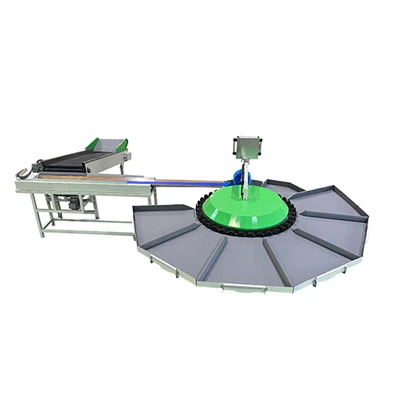
If you’re in the market for a grading sorting machine, or you have questions about which standards apply to your specific product and markets, feel free to reach out. We’ll walk you through exactly what certifications you need, no sales pitch, no confusing jargon—just real talk from someone who’s built these machines for actual farms and processing plants, not just writing specs on a computer.
Packing Machine REFERENCES
ISO 7256, Agricultural and forestry machinery – Fruit and vegetable sorting equipment – Methods of test for performance
ISO 1935, Fruit and vegetable processing machinery – Safety and hygiene requirements
ISO 22000, Food safety management systems – Requirements for any organization in the food chain
ISO 22975, Optical sorting equipment for food – Performance requirements and test methods
ISO 42001, Artificial intelligence management systems – Requirements with guidance for use
EN 1935, Fruit and vegetable processing machinery – Safety and hygiene requirements
Zhengzhou First Industry Co., Ltd.
As one of the most professional grading sorting machine manufacturers in China, we also support customized service. With abundant experience, we warmly welcome you to buy cheap grading sorting machine from our factory. For price consultation, contact us.
Address: No.72,11th Floor, Building 11, No.283 West Third Ring Road, High-tech Industrial Development Zone, Zhengzhou City, Henan Province
E-mail: media@fruitprocess.com
WebSite: https://www.fstsort-machine.com/
